 SWISS VIP SERVICE
Interlaken and the Bernese Oberland: a scenic day out
8 min read
Two lakes, a house mountain, a waterfall valley and the road up to the Jungfraujoch: how to choose and combine a day out from Interlaken.
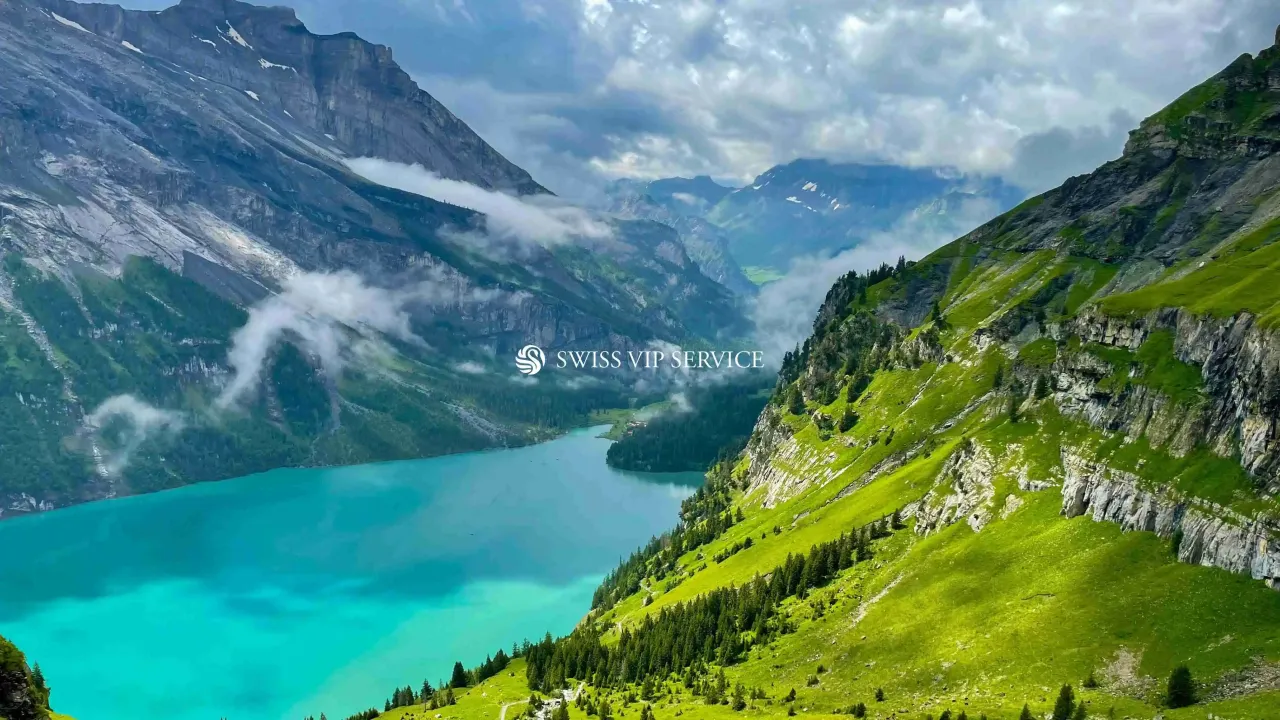
Interlaken sits on a narrow strip of land between two lakes, with the Eiger, Mönch and Jungfrau standing over the rooftops to the south. That position is the whole appeal: within an hour or so you can be on a lake shore, at the foot of a waterfall, on a viewing platform above the town or on a glacier. The difficulty is not finding something to do but choosing, because the Bernese Oberland offers more than one day can hold. This guide sorts the options by what kind of day you want, so that you can build a plan that does not spend half the hours in transit.
Interlaken as a base
The town is small, flat and built around two railway stations, Interlaken West and Interlaken Ost. Most of the region's mountain railways and lake boats start from or near one of them, which makes it an easy place to start from. The destination's own site, Interlaken Tourism, lists the excursions, current events and practical information, and it is the page to check for anything that changes from week to week. Travellers arriving from abroad usually come via Zürich, and the connection from Zürich Airport is a straightforward rail journey; the current timetable is on the SBB site.
One thing to accept early: this is a region of weather. Clouds can cover a summit that was clear at breakfast, and the high stations are the most affected. Keep your plan flexible and look at the live webcams and operating notices of the railway you intend to use before leaving the hotel.
Harder Kulm: the house mountain
If you only have a few hours, start with Harder Kulm. A funicular climbs from the edge of town to the summit at 1,322 metres in roughly ten minutes, according to the official pages, and the reward is the view that defines Interlaken: the town below, the Brienzersee on one side, the Thunersee on the other, and the Eiger, Mönch and Jungfrau ahead. The Two Lakes Bridge, a viewing platform that juts out beside the restaurant, is the spot most visitors come for. The line usually runs from about mid-April to late November; confirm the dates and times on the operator's page before you plan around it.
Harder Kulm works well at either end of the day. Early on it gives you the lay of the land before you decide where to go, and in the evening, when the light turns, it is a calm way to finish a day that has been busy elsewhere. Walkers can climb it from town in one to two hours, though the funicular is the sensible choice if you have a lot planned.
Arriving at Zürich Airport with luggage? A private transfer takes you from the terminal straight to your hotel in Interlaken, so that the first hours of the trip go to the view rather than to connections. Tell us where you are going on our transfer page and we will come back to you with a personal offer.
Two lakes by boat
Thun and Brienz are the two lakes that give Interlaken its name, which means "between the lakes". The steamers and motor ships of BLS Schifffahrt serve both. A boat trip is the least demanding way to see the Oberland: you sit down, the scenery slides past, and there is usually a restaurant or a deck chair to hand. On Lake Brienz the water takes a milky turquoise colour, and the shoreline is mostly steep and wooded with few roads, which gives the ride a different mood from the busier Lake Thun. Timetables vary by season and the Brienzersee has a winter break, so read the current schedule on the operator's website before you commit.
A boat also opens up places that are slow to reach by road. The next two sections both depend on the lake or the valley behind it.
Giessbach Falls on Lake Brienz
On the northern shore of Lake Brienz, the Giessbach tumbles down a wooded slope in a series of steps toward the water, and a historic funicular, in service since 1879, connects the landing stage with the grand hotel above. The falls are lit after dark, which is worth knowing if you are staying late. The easiest way to arrive is by boat from Interlaken or Brienz, and the park around the falls offers short walks with several viewpoints. Leave about two hours here if you want to walk and have lunch without hurrying.
Lauterbrunnen and the Trümmelbach Falls
The Lauterbrunnen valley is a deep, straight-sided glacial trough with waterfalls dropping from almost every cliff. It is a short train ride from Interlaken Ost and one of the most photographed valleys in the Alps. The Trümmelbach Falls are a short distance up the valley: a series of glacier-fed falls that thunder through the inside of the mountain, reached by tunnel lift and walkways. They open seasonally, from spring to autumn, and are among the few attractions in the area that are at their best in rain or snowmelt, so a grey day does not spoil them.
Lauterbrunnen also works as a gateway. From there, trains and cable cars climb to the car-free villages high above the valley, and the same railway network leads on toward the Jungfraujoch. If you prefer a slow day, stay in the valley floor, walk along the river and let the cliffs do the work.
Several stops, one day? The Oberland rewards a flexible schedule, and a connection between a boat, a train and a restaurant is easy to miss when the weather changes. A chauffeur by the hour stays with you for the day, takes you between the valley, the lakes and the town, and waits while you look around. Ask about our chauffeur service and we will prepare a personal offer.
The Jungfraujoch: the high-altitude day
The Jungfraujoch – Top of Europe is the one excursion that really needs a whole day, and the one most affected by the weather. The station stands at 3,454 metres, and the Sphinx observation deck is higher still at 3,571 metres. From the platform you look out over the Aletsch Glacier, which the operator describes as the longest in the Alps. Inside the mountain there is an Ice Palace of carved ice, a walk-through exhibition on the history of the railway and several viewpoints. The area around it belongs to the Swiss Alps Jungfrau-Aletsch UNESCO World Heritage Site.
The journey is part of the experience. From Interlaken Ost the official pages put the trip at about one hour and thirty minutes via Lauterbrunnen or Grindelwald Terminal and the Eiger Express gondola, and the railway has run all year round. The upper stations are cold even in summer, so bring a warm layer, sunglasses and sturdy shoes, and expect to feel the altitude if you walk fast. Jungfrau Railways publishes the current operating information, webcams and ticket options; check it on the morning you travel, because a clear view from the top is never guaranteed.
A plan that works: take the first suitable departure, spend the middle of the day at the top, and keep the afternoon free. If cloud closes in, you have lost nothing but time, and the valley and the lakes remain available as a fallback.
Schynige Platte: a gentler summit
Not everyone wants glaciers. Schynige Platte, reached by a historic mountain railway from Wilderswil near Interlaken, has a different character: a broad ridge with wide views over the two lakes and the northern face of the great peaks, and a botanical alpine garden. It runs in summer only, and the walks from the top are suited to a relaxed day, with a mountain restaurant and a hotel for those who want to stay on the ridge. The railway's own pages give the season, the timetable and the walking routes.
Prefer to have the day arranged? We offer private tours in Switzerland, planned around what you want to see and how much time you have, with a driver at the wheel so that nobody needs to read a timetable. See our private tours and tell us your wishes; we will answer with a personal offer.
Putting a day together
Three combinations cover most tastes.
- The classic: Harder Kulm in the morning for orientation, a lake cruise at midday and an evening walk along the river in town.
- The high day: the Jungfraujoch early, back in the valley by mid-afternoon, and a quiet dinner in Interlaken.
- The valley day: Lauterbrunnen and the Trümmelbach Falls in the morning, then a boat to Giessbach in the afternoon.
Each of these needs a different amount of luck with the weather, and in each the connections between stops decide whether the day feels easy. Leave at least an hour of slack, book what has to be booked through the operator's official site, and keep one indoor option for rain.
Practical points before you go
- Check opening dates and operating hours on each operator's own site; they change by season and year.
- Pack layers. The temperature difference between the lake shore and the high stations is large.
- Carry a little cash and a charged phone, since some small mountain restaurants and kiosks are slow to take cards.
- Start early. The popular excursions are quietest in the first hours of the day.
Interlaken works for a single day trip from Zürich or as the starting point of a longer stay in the Oberland. Whichever way you use it, pick one main attraction, add one gentle one, and leave room for the view.
Written by Swiss VIP Service