 SWISS VIP SERVICE
Geneva for first-time visitors: the lake, the Old Town and the UN district
10 min read
A practical first-visit guide to Geneva: the Jet d'Eau and the lake, the Old Town and its cathedral, the Palais des Nations and the neighbourhoods worth your time.
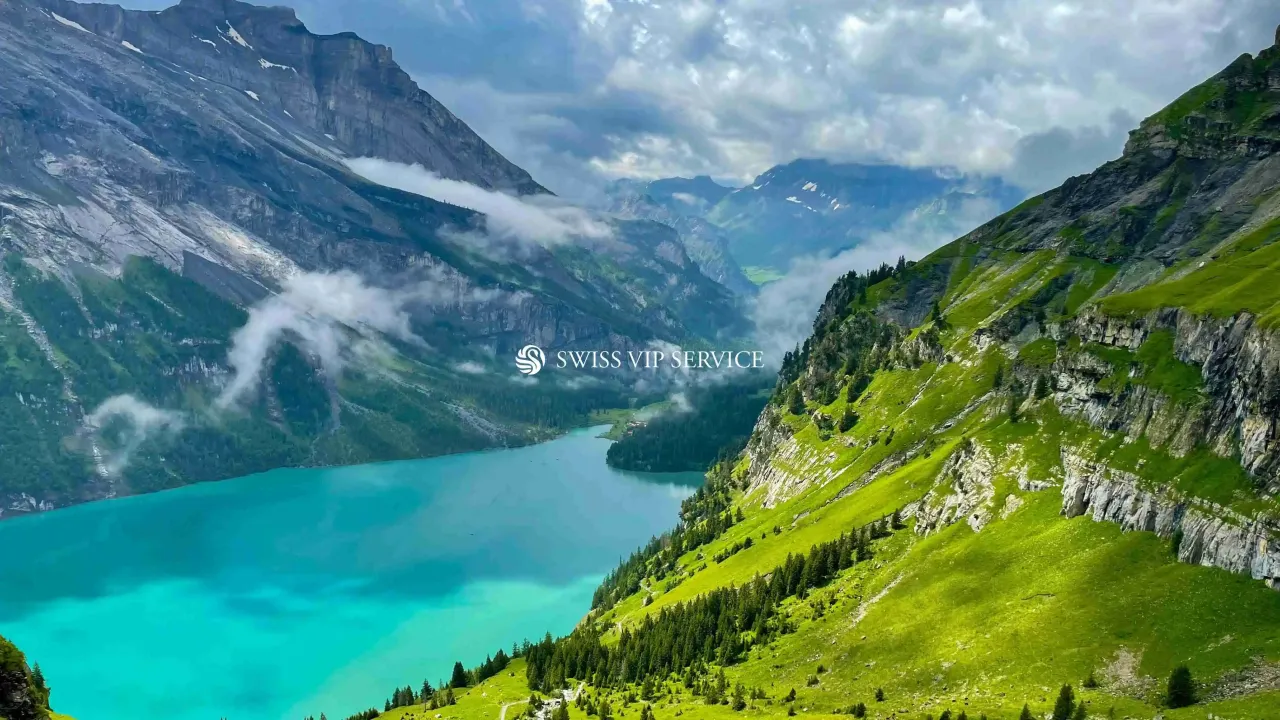
Geneva is a small city with an outsized reputation. It sits on the shore of Lake Geneva, and it has long been a meeting place for diplomats, reformers and watchmakers. For a first visit the sights are compact enough to see in two or three days, but the city rewards a slower pace: a walk along the water, an hour in the Old Town, and one proper look at the international quarter that explains why the world's headlines so often carry a Geneva dateline.
This guide is built for first-time visitors. It follows a sensible order, from the lakefront to the Old Town, the international district and a few neighbourhoods that most short itineraries skip, and it points to the official pages where you can check current hours and booking rules before you go. The destination's own site, Geneva Tourism, is the best single starting point.
Start at the lake and the Jet d'Eau
Every first day in Geneva should begin by the water. The Jet d'Eau is the city's emblem, a plume that rises to about 140 metres from a jetty on the left bank. According to Geneva Tourism it pumps roughly 500 litres per second, leaving the nozzle at about 200 km/h, and the water in the air at any moment weighs around seven tonnes. It looks white because the nozzle mixes the water with millions of air bubbles.
The story behind it is less glamorous than the view. The fountain began in 1886 as a safety valve for the hydraulic plant that powered the city's workshops, and it was moved to the harbour in 1891, when people started coming to look at it. The current height dates from 1951. Watching it is free, and on a calm day you can walk out along the jetty to feel the spray. Keep in mind that it is switched off in strong wind and cold, and for maintenance, so look at the operating information on the official page rather than counting on it.
From the quay, the promenade runs along both banks and is the easiest way to get your bearings. The Pâquis side has the lake baths, while the Eaux-Vives side looks back at the fountain and the Old Town. Plan this part of the day for the morning, when the light on the water is kind and the paths are quiet.
Arriving at Geneva Airport? A private transfer takes you from the terminal to your hotel by the lake without a search for the right tram or taxi rank. Tell us where you are going and we will come back to you with a personal offer.
Cruise on the lake
Seen from the middle of the water, Geneva makes more sense: the fountain, the quays on both banks and the Old Town rising above the left bank. CGN, the lake's historic operator, says it preserves and operates the most prestigious Belle Époque fleet in the world, and its programme includes loop cruises, gourmet cruises and private charters. Departures from Geneva leave from several stations, including Jardin Anglais, Mont-Blanc and Pâquis.
For crossing the harbour rather than cruising, the small Mouette shuttle boats are described on the city's boat travel page. Timetables and the cruise programme change with the season, so choose your departure on the operator's site.
The Old Town on its hill
The Old Town is the part of Geneva that most closely matches the postcard. It climbs a hill above the left bank, and its cobbled lanes lead to the cathedral of Saint-Pierre, which dates from the 12th century and became a symbol of the Protestant Reformation. If you are comfortable with stairs, climb the 157 steps of the tower for a view across the roofs to the lake; inside, the bell known as La Clémence weighs about six tonnes, and there is an archaeological site in the basement.
Place du Bourg-de-Four, at the foot of the hill, is the city's oldest square. Trade fairs were once held here, and some of the narrow houses were built upward in the 15th century to shelter Protestant refugees when the city was nearly full. Today it is a good place to sit with a coffee and watch the town go by.
Two small museums give the quarter its depth. Maison Tavel is described as a unique example of medieval civil architecture in Switzerland; a fire destroyed it in 1334 and the Tavel family rebuilt it. The International Museum of the Reformation is housed in Maison Mallet on Cour Saint-Pierre, next to the cathedral. Check each museum's own pages for opening days, as they vary.
The Reformation Wall
Just below the Old Town, in the Parc des Bastions, the Reformation Wall shows giant statues of John Calvin, William Farel, Theodore Beza and John Knox, with the city motto Post Tenebras Lux engraved in the stone. Allow twenty minutes or so for a walk past it.
Seeing Geneva at your own pace. Old Town streets are steep, and a first day packs a lot in. A chauffeur by the hour stays with you for the day, waits while you climb the cathedral tower and takes you to the next stop, so you do not have to think about parking or taxis. Get in touch and we will come back to you with an offer.
The international district
What makes Geneva different from other cities of its size is the concentration of international institutions. Geneva Tourism counts more than 400 NGOs and 40 international organisations in the city. For a first-time visitor the best way to understand this is to go to the Palais des Nations, formerly the headquarters of the League of Nations and now the home of the United Nations Office at Geneva. It stands in Ariana Park and is described as an outstanding example of twentieth-century architecture.
Visits are by guided tour, which lasts about an hour. There are a few rules that surprise people. Every visitor must carry a valid passport or an accepted ID card, a badge is registered for each person in advance, and you are asked to arrive 30 minutes early for security screening at the Pregny Gate entrance on Avenue de la Paix. There is no parking inside the grounds. The tour covers about two kilometres on foot, and renovation work may change the route. Places are limited and book up early, so check the official page for how and when booking opens.
If you cannot get a place, the Portail des Nations is a visitor centre that explains global diplomacy and gives context for the district. Those with a scientific curiosity can add CERN Science Gateway, the visitor and exhibition space of CERN, the European particle physics laboratory on the edge of the city.
Neighbourhoods beyond the postcard
Geneva Tourism's guide to the city's districts is a handy way to decide where to spend your free hours. A few highlights:
- Pâquis. A multi-ethnic district running from the station to the lakefront, known for international restaurants and for the Bains des Pâquis, which has a beach, a diving platform, a sauna and a lakeside restaurant.
- Plainpalais and the Quartier des Bains. A weekly flea market, one of Europe's largest skateparks and, in the former industrial area, the city's contemporary art museums. This is also where you find the Patek Philippe Museum, devoted to watchmaking.
- Eaux-Vives. On the opposite shore, with Parc La Grange, a beach and some of the best views of the Jet d'Eau.
- Carouge. A former independent hamlet on the Arve with Sardinian-style architecture, boutiques, artisans and cafés; it is sometimes called Geneva's Greenwich Village.
If watchmaking interests you, the Patek Philippe Museum is the most direct place to start. Check the museum's website for the days it is open before you set off.
Getting around the city
Geneva is easy to cross on foot, and the public transport network run by tpg covers the rest. If you are staying for a couple of days, the Geneva City Pass bundles sights and transport; read the current conditions on the official page, since the offer and its contents change. The harbour boats mentioned earlier work as transport as well as sightseeing.
Most air travellers arrive at Geneva Airport; its official page has the current practical information. On departure day, build in margin for the airport rather than treating it as an afterthought.
A day in Geneva and beyond. If you would like to see more than the city, a private tour can take in the lake shore and the surrounding region at your own pace, with a chauffeur who handles the driving. Contact us with your plans and we will come back to you with a personal offer.
A sample first day
A simple order works well for a first day. Start with the Jet d'Eau and the lakefront in the morning, then walk or take a short ride to the Old Town for the cathedral, Bourg-de-Four and the Reformation Wall. Have lunch in the old streets, spend the afternoon at the Palais des Nations if you have booked a tour, and finish with a stroll along the water in Pâquis or Eaux-Vives, where the evening light is at its best.
On a second day, add a lake cruise, the Patek Philippe Museum or Carouge, and consider a half-day trip outside the city. The point of Geneva is not to see everything but to see a few things well.
Practical tips for first-time visitors
- Check opening information on the official pages. Fountain hours, museum days, cruise timetables and tour availability change with the season, so the links in this article are there for you to confirm the details closer to your date.
- Bring identification for the United Nations. Without the right ID you will not be admitted to the Palais des Nations, however early you booked.
- Wear shoes for hills. The Old Town is steep, and the cathedral tower is stairs only.
- Plan for the weather. The wind that stops the Jet d'Eau also makes the lakefront cold in winter; layers are better than a single heavy coat.
- Do not rush the lake. Even a short boat ride or an hour on the quay gives you a different view of the city.
Why Geneva rewards a slower visit
Geneva can look like a city of institutions and banks from a distance. Up close it is a place of squares, quays and quiet streets, with a surprising amount to do within a short walk of the water. A first visit does not need a rigid plan: pick three things from this guide, check their official pages for current details, and leave room to wander. The rest of the city will make itself known.
When you are ready to plan the practical side, from the airport arrival to a day with a driver, our team can help you put it together.
Written by Swiss VIP Service