 SWISS VIP SERVICE
Skiing in Davos Klosters: Parsenn and the Jakobshorn
9 min read
Long Parsenn descents, the Jakobshorn's freestyle scene and the world's first T-bar: how a ski trip to Davos Klosters fits together.
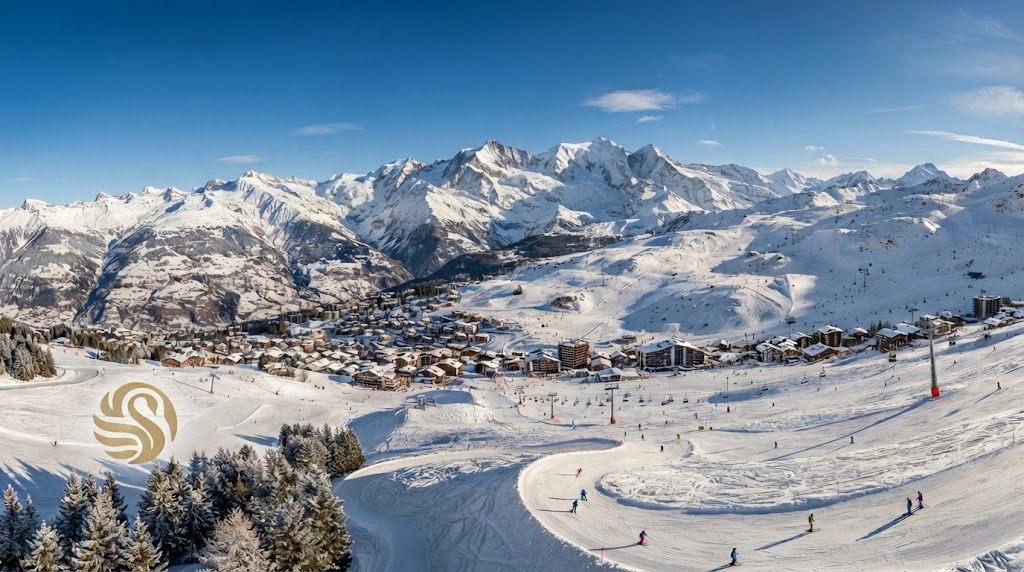
Davos is better known for its congress centre than for its skiing, which is a pity, because the mountains around Davos and Klosters hold some of the most varied terrain in Graubünden. There are long wide descents on the Parsenn side, a freestyle and snowboard scene on the Jakobshorn that has been going since the 1980s, and a handful of quieter mountains for families and for skiers who would rather avoid a crowd. This guide takes the two big ones, Parsenn and Jakobshorn, and explains how a ski trip here fits together.
The resort and its slopes
The official pages of the destination list six mountains: Parsenn, Jakobshorn, Schatzalp and Strela, Madrisa, Pischa and Rinerhorn. The lifts are run by Davos Klosters Mountains, and the Parsenn side can be reached from both towns.
Parsenn is the big one, with about 97 km of slopes according to the destination. You reach it from Davos with the Parsennbahn or from Klosters with the Gotschnabahn, and the character is long and open: wide pistes, plenty of intermediate terrain, and a famous descent that we come to below. The Parsennhütte is the best-known hut and, at the end of March, the stage of the Davos Cover Festival.
The Jakobshorn has about 55 km of slopes, graded from blue to black, and a different mood altogether. The Bolgen Plaza at the valley station is the meeting point, the Jatzhütte at about 2,560 m has an après-ski culture that goes back to 1988, and the JatzPark below it is where the freestyle crowd practises. For a serious test of the legs, the Davos Vertical is a black run of 1,000 vertical metres from the upper mountain through the forest down to Davos Platz.
Arriving from Zürich Airport? Our private transfer service takes you from the airport straight to your hotel in Davos or Klosters, so the first morning on the slopes starts rested. Tell us where you are going and we will come back to you with a personal offer.
Parsenn: the cradle of Swiss skiing
The destination calls Parsenn the cradle of skiing in Switzerland, and the story behind that is a good one. In 1895, so the official account goes, four English tourists lost their way on the Weissfluhjoch and ended up in Küblis in the Prättigau instead of where they meant to be. In doing so they discovered the descent that became the Parsenn run: about 12 km from the Weissfluh summit down to Küblis, which the destination counts among the longest ski runs in Europe. It is skiable today when there is enough snow, and the operator has turned it into a Nostalgia Run with information panels along the way.
Beyond the classic, the Parsenn valley run to Davos Dorf is a steep black descent that the destination counts among the most beautiful valley descents. Two timed courses add some competition: the Nordica Speedrun measures your top speed at the finish, and there is a ski and snowboard cross course by the Totalp chairlift. On Weissfluhjoch you can also stay in the igloo village, with rooms designed by ice artists.
For off-piste, the destination describes a three-lift freeride tour that starts at the Weissfluh summit, drops steeply towards Sapün and continues through Arosa and Lenzerheide to Tschiertschen; tickets are sold at the Parsennbahn valley station in Davos and at the Gotschnabahn in Klosters. Anyone heading off the groomed runs should read the destination's pages on freeriding first and go with a guide.
Jakobshorn: freestyle, snowboarding and the first T-bar
If Parsenn is about distance, the Jakobshorn is about attitude. In the 1980s it was the only mountain here where snowboarders were allowed on the lifts, and the freestyle scene has been based here ever since. The freestyle area, the JatzPark at about 2,500 m, has four lines groomed daily with about 20 features, from beginner rollers and boxes to medium kickers and a large kicker the park calls Big Bertha.
The Jakobshorn is also where lift history was made. On 24 December 1934 the world's first T-bar lift started running on the Bolgen, built to the patent that the Zürich engineer Ernst Gustav Constam registered in 1930 and sponsored by the hotelier and farmer Leonhard Fopp, who wanted a tow on his land. The first season carried about 70,000 skiers, and the single bar was then changed to a double T-shaped bar to raise capacity.
The mountain has not stood still. In autumn 2025 the operator announced a new reservoir, the Fuxä See near Usser Isch, to feed efficient snowmaking on the valley runs down to Bolgen. The beginners' terrain at the Carjöl two-seater chairlift and the Bolgen ski lift keeps the mountain accessible, and for those who want a secured but ungroomed day without any climbing there is the Funi Line, which links freeride descents served by lifts.
A driver for the whole day. Davos and Klosters have separate valley stations and a lot of ground between them. With a private chauffeur by the hour you can ski Parsenn from the Davos side in the morning and be collected in Klosters at the end of the day, or move between mountains without worrying about parking. Get in touch for an offer and tell us how you would like to plan the day.
Opening times
Dates here depend on the weather and change from year to year, so treat everything below as typical and check the official page before you travel. For winter 2026/27 the operator's operating-times page lists the following, subject to change:
Parsenn Davos: weekend operation from 13 to 15 November 2026, then continuous operation from 20 November 2026 to 4 April 2027.
Parsenn Klosters: weekend operation from 27 to 29 November, then continuous operation from 4 December 2026 to 4 April 2027.
Jakobshorn: weekend operation from 27 to 29 November, then continuous operation from 4 December 2026 to 11 April 2027.
Schatzalp, Madrisa, Rinerhorn and Pischa follow later in December and close at the end of March; Rinerhorn and Pischa are closed during the World Economic Forum.
So the season usually runs from mid-November to the beginning of April, with the smaller mountains opening later and closing earlier. The official page does not give daily opening and closing times for the lifts, so for those, use the live operating information on the day.
Snow
The ski area climbs well above the town, with the Jatzhütte at about 2,560 m and the Parsenn Panorama Trail averaging about 2,300 m. The Fuxä See reservoir on the Jakobshorn is the most recent sign of that investment. The Schatzalp side is the exception: its pages say it runs on natural snow alone, with no artificial snowmaking, which makes it a pleasant day out after a fresh fall and a less sure bet in a thin winter.
We will not quote a snow depth here, because the number would be out of date by lunchtime. Before you set off, check the live information on the webcams and operating pages of Davos Klosters Mountains and look at the state of the slopes that morning.
Looking back: a century of skiing in Davos
Davos has been a winter place for a long time. Parsenn gave the area its first great ski descent in 1895, and according to the operator's history the Parsennbahn funicular was built in two stages, in 1931 and 1932, as the first mountain railway designed to carry skiers.
It also made racing possible. The Parsenn Derby was first run in 1924, from the Parsennfurka to Küblis, organised by the Ski Club Davos and the Davos English Ski Club. In 1933 the start moved to the Weissfluh summit, and in 1942 compulsory gates ended the era of free route choice. The race went on for decades, Kristian Ghedina became the first Italian winner in 2002, and the destination now states that the event is no longer held. The mountain it ran on, of course, is still there.
Across the valley, Schatzalp tells another story. The Art Nouveau building began as a sanatorium and has been a hotel since 1953, and the mountain is said to have inspired Thomas Mann's novel The Magic Mountain. Its ski area runs on natural snow and still uses a historic chairlift. And on the Klosters side, Madrisa marked its 60th anniversary in 2025 with the return of the Glatteggen T-bar after about ten years.
Where to stay
Davos is a long town, so where you sleep decides which lift you walk to. Four options that fit different plans:
Parsenn Resort in Davos Dorf is described as right by the Parsenn valley run, so you can ski down to the door in the afternoon.
Mountain Plaza Hotel is central in Davos and, per its page, close to the Jakobshorn and Bolgen ski areas, which suits a snowboard or freestyle week.
Hotel Waldhuus Davos stands at the edge of a forest next to the cross-country trails, a calmer base for anyone who skis both ways.
Hotel Schatzalp is the historic Art Nouveau hotel above Davos, reached by the Schatzalpbahn cable car from Davos Platz in about four minutes.
Ratings and rates change, so look at each hotel's own page before choosing.
Getting there
By train, take SBB from Zürich to Landquart and change there to the Rhaetian Railway for Klosters or Davos; Zürich Airport is the nearest major airport. By road, the operator's arrival page gives the way: the A3 and A13 motorways to Landquart, then the Kantonsstrasse 28 through the Prättigau valley, about two hours from Zürich depending on traffic. Snow chains can be necessary or even compulsory after a snowfall, and there are paid car parks at the valley stations, but the mountains themselves are generally not accessible by car. The Vereina car train through the tunnel is an alternative to the pass.
Come back by a different road. A winter trip does not have to end the way it began. On a private tour we can plan the return from Davos with a stop somewhere worth seeing, instead of the shortest way to the airport. Tell us where you are going and we will come back to you with a personal offer.
Planning your trip
Three things make a Davos ski trip run smoothly. First, decide which side you want: Parsenn for distance and the classic descents, the Jakobshorn for park, pistes and après-ski, or both, linked by the valley. Second, think about the season: the main mountains open in November and December, while Madrisa, Rinerhorn and Pischa open around Christmas and close at the end of March. Third, leave the logistics to someone else, so that the first and last day of the trip are as good as the days in between.
That is where a transfer and a driver on site help most. Get in touch through our contact page, tell us your dates and where you are staying, and we will come back to you with a personal offer.
Written by Swiss VIP Service